
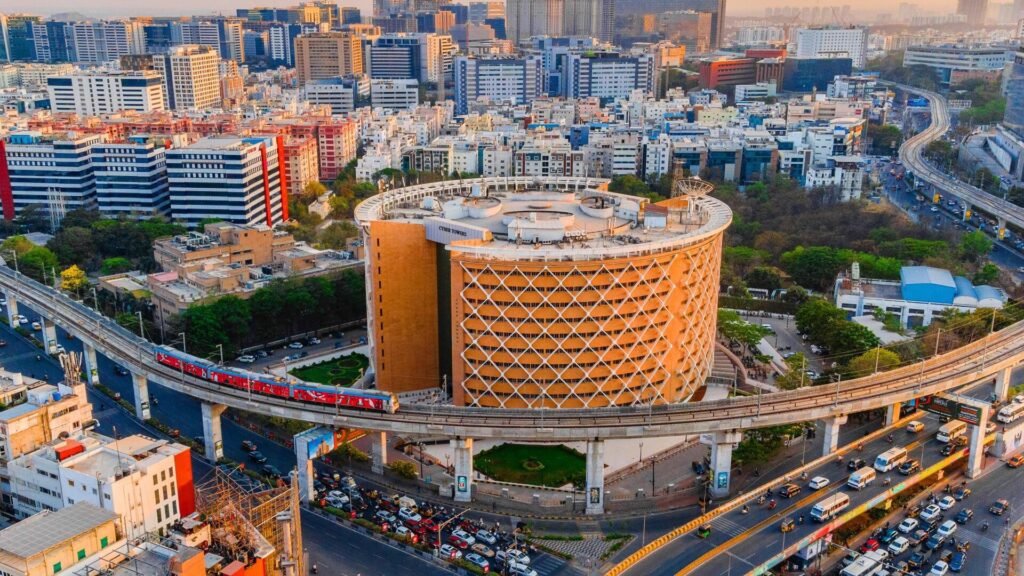
The Microsoft Hyderabad data centre expansion marks an important development in India’s cloud computing, artificial intelligence (AI), and digital infrastructure sectors. As businesses increasingly adopt AI-powered solutions, demand for reliable cloud services, high-performance computing, and secure data storage continues to grow.
On September 21, 2026, Microsoft announced the strategic importance of its India South Central cloud region in Hyderabad. The facility supports advanced AI workloads and forms part of the company’s $20.5 billion investment commitment in India. Microsoft is also highlighting water-efficient cooling, community water initiatives, and AI skills development as part of its broader approach to responsible technology growth.
This development reflects Hyderabad’s growing role as a technology hub and India’s ambition to strengthen domestic AI research, innovation, and technical capabilities.

1. Microsoft Hyderabad Data Centre: Cloud Infrastructure Expansion
The Microsoft Hyderabad data centre strengthens Hyderabad’s position as a growing hub for cloud computing, artificial intelligence, and digital infrastructure. The expansion reflects increasing demand for secure data storage, scalable computing power, and advanced enterprise technology across India.
Key developments include:
- Advanced AI infrastructure: Supporting AI-powered applications and high-performance computing.
- Enterprise cloud services: Helping businesses modernise their digital operations.
- Data security and compliance: Supporting relevant Indian data protection and sector-specific requirements.
- Scalable technology infrastructure: Enabling organisations to expand their cloud capacity as demand increases.
For Hyderabad, this investment reinforces the city’s importance in India’s technology ecosystem. It also creates opportunities for technology companies, service providers, and professionals working in cloud computing and AI.
2. Water-Efficient Cooling and Sustainable Data Centres
Large data centres require substantial computing power and effective cooling systems. As AI workloads increase, managing electricity consumption and water resources becomes increasingly important.
Microsoft has stated that its new Hyderabad AI data centres use effectively zero water for cooling, relying on high-efficiency mechanical cooling technology.
This approach is significant because traditional water-based cooling systems can place additional pressure on local water resources, particularly in areas experiencing water stress.
Microsoft’s broader sustainability initiatives include:
- Improving energy and operational efficiency.
- Working towards its global carbon-negative, water-positive, and zero-waste goals by 2030.
- Supporting groundwater recharge and rainwater harvesting initiatives.
- Investing in community water resilience programmes.
The company’s Hyderabad initiatives include groundwater recharge work in Elikatta, where Microsoft reported approximately five million litres of groundwater recharge capacity added by June 2026.
However, water-efficient cooling does not eliminate every environmental impact. Electricity demand, backup power, construction, and local resource availability remain important considerations for sustainable data centre development.
3. Renewable Energy and Responsible Technology Growth
Reliable electricity is essential for cloud infrastructure and AI computing. As India’s data centre industry expands, the availability of dependable and lower-carbon energy will become increasingly important.
Microsoft’s broader operations and sustainability strategy includes renewable energy procurement, improved energy efficiency, and measures to reduce operational emissions. In Hyderabad, the company has also highlighted renewable biofuel for backup generators and solar installations supporting local public institutions.
The long-term objective is to make digital infrastructure more efficient while reducing its environmental footprint.
For India, the opportunity is to develop data centres alongside cleaner electricity generation, stronger power transmission networks, and responsible resource management.
A sustainable approach can help technology companies balance business expansion with environmental priorities and community needs.
4. India’s Push for Domestic AI Research and Technology Capabilities
India is working to strengthen its position in the global AI economy through domestic research, computing infrastructure, semiconductor development, and technical education.
The government’s IndiaAI Mission aims to expand access to AI computing resources and support the development and adoption of AI technologies within the country.
Government initiatives include:
- AI computing capacity: Providing eligible researchers, startups, and academic institutions with access to computing resources.
- Indigenous AI development: Supporting Indian AI models and solutions suited to domestic needs.
- Research and innovation: Encouraging collaboration among universities, research institutions, and businesses.
- Semiconductor capabilities: Strengthening India’s technology manufacturing ecosystem.
- Digital skills development: Preparing professionals to work in emerging technology fields.
These initiatives are important because AI leadership requires more than advanced data centres. India also needs skilled researchers, capable developers, reliable computing infrastructure, and strong domestic innovation networks.
Microsoft’s investment in Hyderabad complements this broader technology ecosystem by expanding access to cloud infrastructure and AI services.

5. AI Skills and Employment Opportunities
The expansion of AI infrastructure increases the need for professionals with specialised technical knowledge.
Potential career areas include:
- Cloud infrastructure management
- Artificial intelligence and machine learning
- Data engineering and analytics
- Cybersecurity and network operations
- Data centre operations and maintenance
- Renewable energy and infrastructure management
Microsoft announced in September 2026 that it had equipped more than 10 million Indians with AI skills towards its commitment to skill 20 million people by 2030.
The company has also partnered with Young India Skills University and other organisations on training programmes designed to prepare learners for careers in data centre operations.
For students and working professionals, these developments highlight the importance of practical technology skills, industry-recognised training, and continuous learning.
6. What Does This Mean for Hyderabad’s Growth?
Hyderabad’s expanding digital infrastructure can contribute to economic activity, employment, and demand for supporting services.
Data centre investments may generate opportunities in construction, electrical engineering, cooling systems, security, telecommunications, facility management, and technology services.
The wider effects may also influence commercial real estate demand and the development of technology-oriented business districts.
However, the benefits will depend on factors such as local infrastructure capacity, workforce availability, transport connectivity, electricity supply, and environmental management.
For property investors, technology investment is one factor to consider when evaluating Hyderabad’s long-term growth. It should not be treated as a guarantee of property appreciation.
Buyers should independently assess location, infrastructure access, approved land use, legal documentation, market demand, and the overall investment budget before making a property decision.

7. The Future of AI and Sustainable Infrastructure in India
India’s next phase of digital growth will depend on combining advanced technology with responsible infrastructure planning.
Companies are investing in cloud platforms and AI computing, while policymakers are focusing on domestic innovation, skills, energy availability, and technology self-reliance.
The priorities for future development include:
- Expanding reliable cloud and AI computing capacity.
- Improving energy efficiency and access to cleaner electricity.
- Protecting water resources through efficient cooling and conservation.
- Supporting domestic AI research and semiconductor development.
- Creating employment through technical education and industry partnerships.
Coordinated action by government, technology companies, educational institutions, and local communities will be essential to achieving sustainable digital growth.
Conclusion
The Microsoft Hyderabad data centre expansion represents an important step in India’s evolving cloud computing and AI infrastructure landscape. Its emphasis on AI-ready computing, water-efficient cooling, community initiatives, and workforce development highlights the growing connection between technology investment and sustainability.
At the same time, India’s efforts to strengthen domestic AI research, technical skills, and computing capabilities can help create a more resilient digital economy.
For Hyderabad, the long-term opportunity lies in developing technology infrastructure that supports innovation, employment, and economic growth while respecting local environmental and infrastructure requirements.
Explore • Verify • Decide — Milestone Infra Group
Follow Milestone Infra Group for real estate insights, Hyderabad infrastructure updates, and property investment information.
Website: https://milestoneinfragroup.com/
Frequently Asked Questions
1. What is Microsoft’s India South Central region?
It is Microsoft’s cloud data centre region in Hyderabad, designed to support cloud services, enterprise applications, and advanced AI workloads.
2. Does Microsoft’s Hyderabad data centre use water for cooling?
Microsoft states that its new Hyderabad AI data centres use effectively zero water for cooling through high-efficiency mechanical cooling systems.
3. How is India supporting domestic AI development?
India is supporting AI computing access, domestic AI models, research, semiconductor capabilities, and technical skill development through government initiatives, including the IndiaAI Mission.
4. Can Microsoft’s Hyderabad expansion affect real estate demand?
It may support demand for commercial space and related services over time. However, any effect on residential or land prices depends on local market conditions, infrastructure, connectivity, and other factors.
5. What skills are useful for data centre careers?
Cloud computing, electrical engineering, networking, cybersecurity, data engineering, AI, and facility management are relevant areas for aspiring professionals.